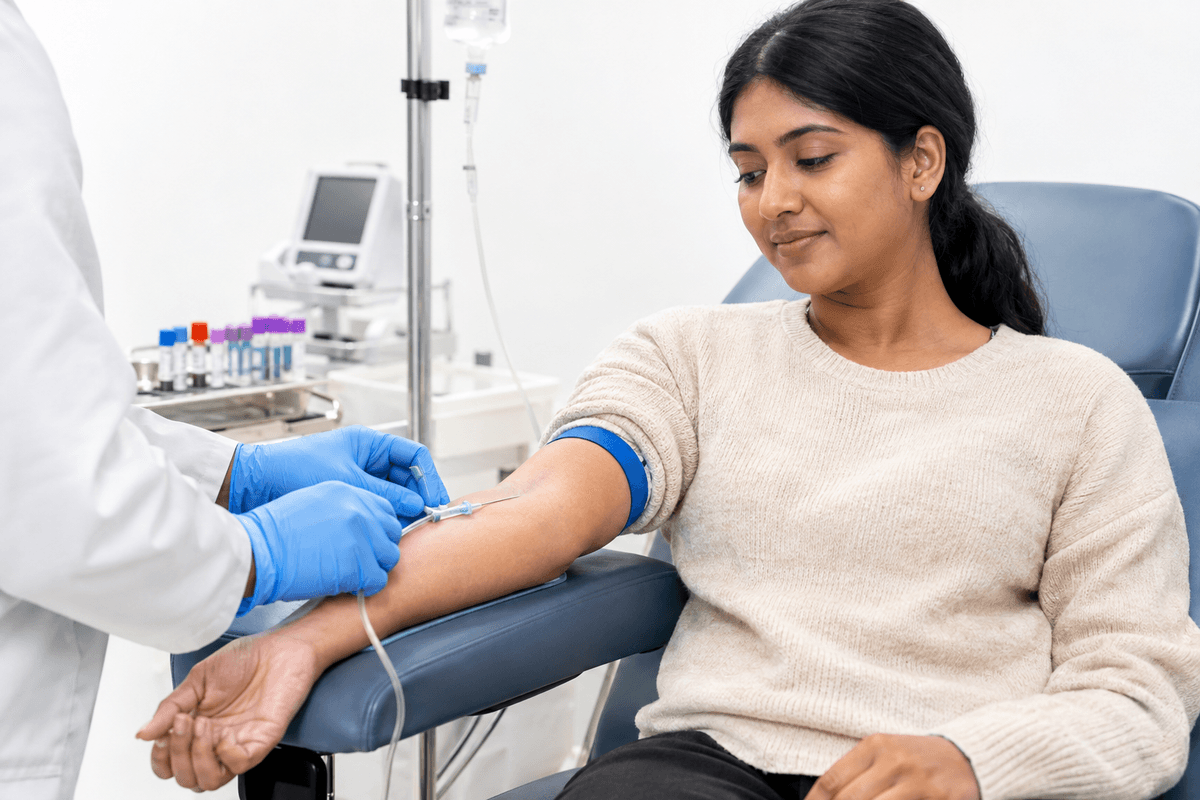
Performed by Dr. Kavya Jonnalagadda at Sree Charith Hospital
Growth Hormone Stimulation Tests in Tirupati are specialized diagnostic procedures that assess the pituitary gland's ability to produce adequate growth hormone in response to specific stimuli. These tests involve administering medications that normally trigger GH release, followed by timed blood sampling to measure hormone levels. At Sree Charith Hospital, Dr. Kavya Jonnalagadda, an experienced endocrinologist, provides comprehensive GH testing with advanced laboratory support and personalized patient care.
We believe in honest, upfront disclosure so you can make an informed decision.
A step-by-step look at what happens during this procedure.
Initial blood sample is drawn to measure baseline growth hormone and glucose levels before stimulation begins.
A GH-stimulating medication such as insulin, arginine, glucagon, or clonidine is administered either intravenously or orally depending on the protocol.
Multiple blood samples are collected at specific intervals, typically every 30 minutes for 2-4 hours, to monitor GH response.
Vital signs and glucose levels are monitored throughout the test to ensure patient safety and detect any adverse reactions.
Blood samples are analyzed to measure peak GH levels and determine if the pituitary gland responds adequately to stimulation.
A structured, patient-first approach from first consultation to full recovery.
Dr. Kavya Jonnalagadda conducts a thorough evaluation including medical history review, physical examination, and explanation of the testing protocol to ensure patient understanding and preparation.
Our endocrinology unit at Sree Charith Hospital provides a comfortable, monitored setting with trained nursing staff present throughout the procedure to manage any complications.
We utilize state-of-the-art immunoassay technology for precise GH measurement with rapid turnaround times, ensuring accurate diagnostic results.
Dr. Jonnalagadda provides detailed result interpretation, discusses treatment options if deficiency is confirmed, and develops personalized management plans based on individual patient needs.
What to expect at each stage of your recovery journey.
Patients are observed for 30-60 minutes after the final blood draw and given food to normalize blood sugar. Mild fatigue or headache may occur but typically resolves within hours.
Most patients return to normal activities the same day. Adequate hydration and rest are recommended. Avoid heavy meals and strenuous exercise for the remainder of the day.
No specific recovery restrictions after the first day. Patients await laboratory results and schedule follow-up consultation to discuss findings and next steps in management.
The test provides definitive evidence of growth hormone deficiency or sufficiency, enabling precise diagnosis of pituitary function disorders and guiding appropriate treatment decisions.
Results determine eligibility for growth hormone replacement therapy in children and adults, helping optimize growth potential and metabolic health through targeted interventions.
For patients already on treatment, stimulation tests help assess therapy effectiveness and guide dosage adjustments to achieve optimal hormone levels.
Testing helps identify underlying pituitary tumors, hypothalamic disorders, or genetic conditions affecting GH production, facilitating comprehensive endocrine management.
Let's clear up some of the most common myths about growth hormone (gh) stimulation tests.
Get a personalised assessment from an experienced specialist. Understand your options, ask your questions, and decide with confidence.