Treated by Dr. Kavya Jonnalagadda at Sree Charith Hospital
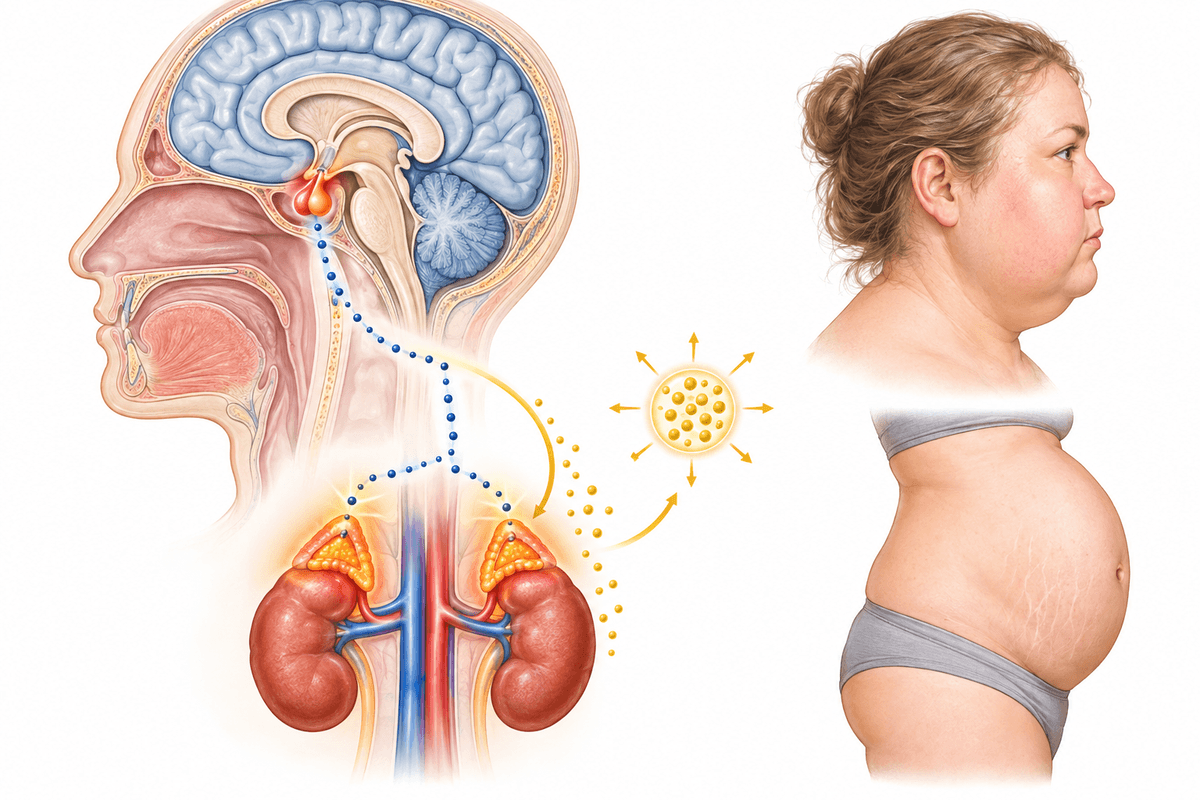
Cushing's disease is a rare hormonal disorder affecting individuals in Tirupati and across India, caused by excessive cortisol production due to a pituitary tumor. This condition leads to various metabolic and physical changes that significantly impact quality of life. At Sree Charith Hospital, endocrinologist Dr. Kavya Jonnalagadda provides comprehensive evaluation and treatment for patients with Cushing's disease, utilizing advanced diagnostic protocols and evidence-based therapeutic approaches.
The most common form caused by a pituitary adenoma that secretes excess adrenocorticotropic hormone (ACTH), stimulating the adrenal glands to produce elevated cortisol levels. This accounts for approximately 80% of Cushing's disease cases.
A variant where the pituitary tumor exceeds 10mm in diameter, often causing visual field defects and headaches in addition to hormonal symptoms. These larger tumors may require more aggressive surgical intervention and have different recurrence patterns.
Characterized by small pituitary tumors less than 10mm that may be difficult to visualize on imaging but still produce significant ACTH excess. These cases often require specialized petrosal sinus sampling for definitive diagnosis and localization.
Multiple factors can contribute to the development and progression of this condition.
Cushing's disease develops gradually. Recognising symptoms early gives you more treatment options.
From conservative to surgical — we always start with the least invasive option first.
A structured, patient-first approach from first visit to full recovery.
Dr. Kavya Jonnalagadda at Sree Charith Hospital begins with detailed clinical evaluation and specialized endocrine testing including 24-hour urinary free cortisol, late-night salivary cortisol, and low-dose dexamethasone suppression tests to confirm hypercortisolism and establish the diagnosis definitively.
Our team performs high-resolution pituitary MRI with contrast, ACTH measurements, and high-dose dexamethasone suppression testing to differentiate Cushing's disease from other causes of Cushing's syndrome. When needed, we coordinate inferior petrosal sinus sampling for precise localization of ACTH-secreting adenomas.
Sree Charith Hospital coordinates care between endocrinology, neurosurgery, and radiology specialists to develop individualized treatment protocols. We carefully manage comorbidities like diabetes, hypertension, and osteoporosis while optimizing patients for definitive surgical or medical therapy based on tumor characteristics and patient factors.
Following treatment, Dr. Jonnalagadda provides ongoing surveillance with regular cortisol assessments, pituitary function testing, and imaging to detect recurrence early. Our comprehensive follow-up program addresses metabolic recovery, bone health restoration, psychological support, and management of any residual pituitary deficiencies requiring hormone replacement.
What to expect at each phase of recovery.
The first 1-2 weeks after surgery or treatment initiation focus on monitoring for adrenal insufficiency, managing electrolyte imbalances, and ensuring appropriate glucocorticoid replacement. Patients undergo frequent cortisol measurements and clinical assessments to confirm biochemical remission and adjust medications accordingly.
Over 3-12 months, patients experience gradual improvement in physical features including weight loss, reduction in moon facies, healing of striae, and normalization of blood pressure and glucose levels. Bone density begins to improve, muscle strength returns, and psychological symptoms like depression and anxiety start to resolve with normalized cortisol levels.
Continued recovery over 1-3 years involves complete reversal of many Cushing's features, although some changes like striae may persist. Patients work with endocrinology to optimize bone health, manage any residual metabolic issues, and undergo periodic surveillance imaging and hormonal testing to monitor for potential disease recurrence requiring intervention.
Transsphenoidal surgery achieves initial remission in 70-90% of patients with microadenomas when performed by experienced neurosurgeons, with immediate normalization of cortisol levels and resolution of the underlying hormonal excess within days to weeks of successful tumor removal.
Most patients experience significant improvement in cushingoid features including facial rounding, central obesity, skin thinning, and easy bruising within 6-12 months of achieving biochemical cure, though some features like striae may show incomplete resolution and require cosmetic management.
Blood pressure, glucose control, and lipid profiles typically normalize within months of successful treatment, often allowing discontinuation of antihypertensive and antidiabetic medications. Bone mineral density improves gradually, reducing fracture risk, although recovery may take 2-3 years and sometimes requires ongoing osteoporosis therapy.
Patients report substantial improvements in energy levels, mood, cognitive function, and overall well-being following successful treatment of Cushing's disease. However, some individuals may experience persistent fatigue or psychological symptoms requiring ongoing support and management during the recovery period.
Untreated Cushing's disease leads to severe complications including uncontrolled diabetes, cardiovascular disease, recurrent infections, and debilitating osteoporosis with pathological fractures. The chronic excess cortisol exposure significantly increases mortality risk from cardiovascular events, thromboembolic complications, and opportunistic infections. Progressive muscle weakness, psychiatric disturbances, and profound deterioration in quality of life make early diagnosis and treatment essential for preventing irreversible complications and premature death.
Seek immediate evaluation from an endocrinologist if you experience unexplained weight gain concentrated in the face and trunk, especially when accompanied by easy bruising, purple stretch marks, persistent high blood pressure, or new-onset diabetes. Early consultation is crucial if you develop these symptoms along with muscle weakness, mood changes, or menstrual irregularities in women. At Sree Charith Hospital in Tirupati, Dr. Kavya Jonnalagadda provides expert assessment for suspected Cushing's disease with prompt diagnostic testing and appropriate treatment recommendations.
Early treatment means more options and better outcomes. Book a consultation to understand your condition and explore the right path forward.